When a request feels wrong,
check somewhere safer.
CodeWords gives you and the people you trust a separate way to check unusual calls, texts, emails, and video meetings before anyone sends money, shares access, or changes a plan.
CodeWords confirms an enrolled phone and a specific request. It does not prove a voice, email sender or legal identity.
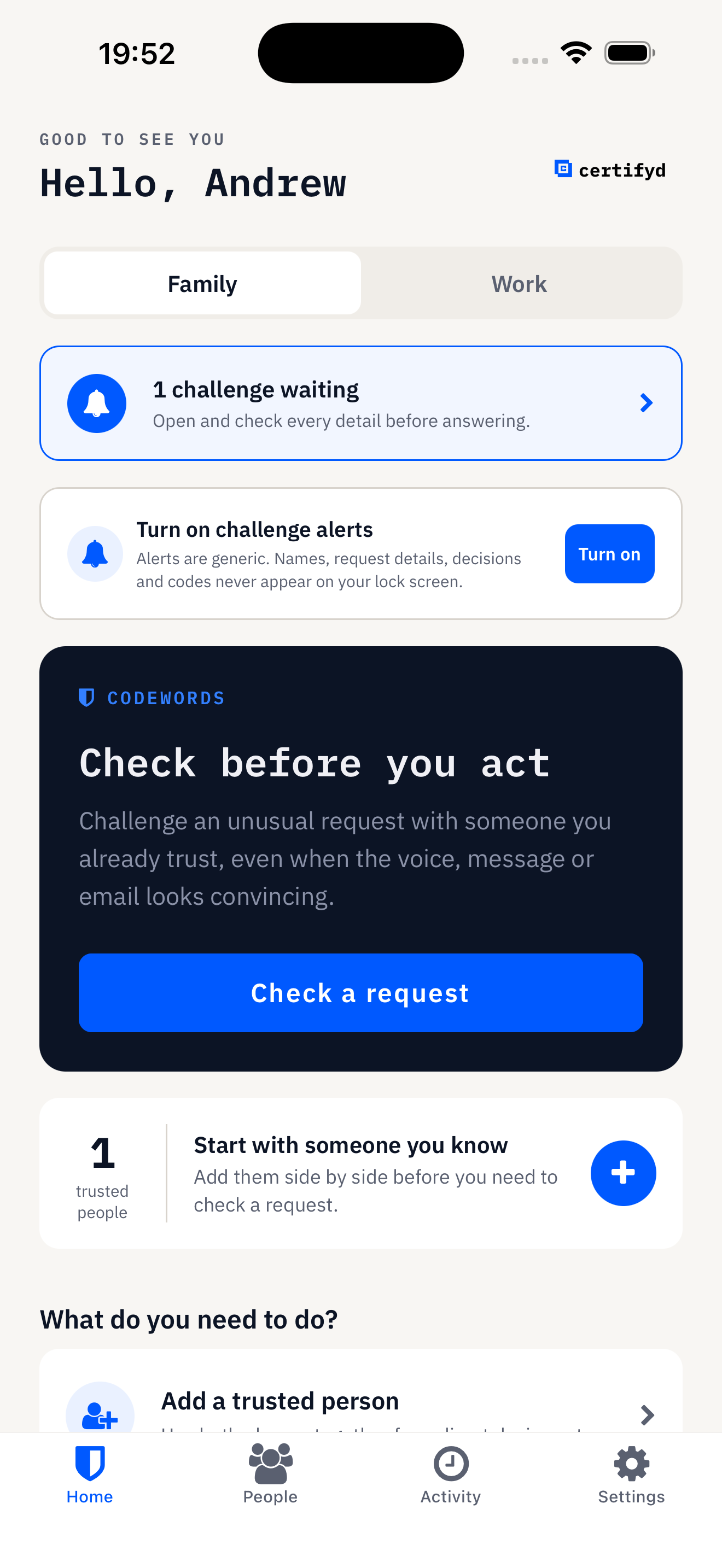
How it works
Trust starts before the suspicious call.
Caller ID, a familiar voice and an email address can all be imitated. CodeWords creates a separate relationship between two enrolled phones first.
01
Connect while you are together
One phone shows changing signed QR frames. The other scans them and finds the matching nearby Bluetooth service.
02
Check both signals
The phones exchange a fresh signed Bluetooth challenge. Both people compare the same three words and six-digit number before accepting.
03
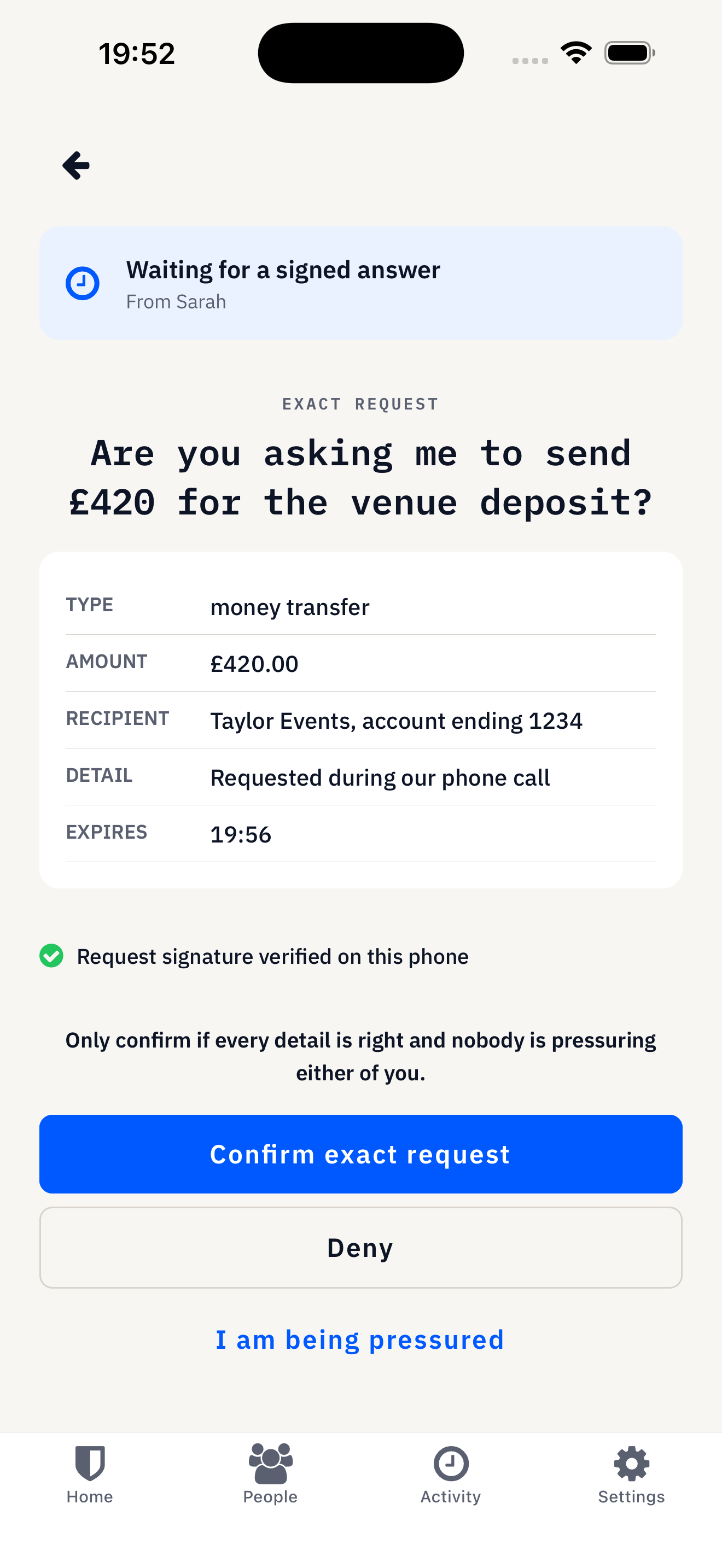
Challenge the exact request
Later, ask about the payment, password reset, file share or safety request itself. The other phone can confirm, deny or report pressure.
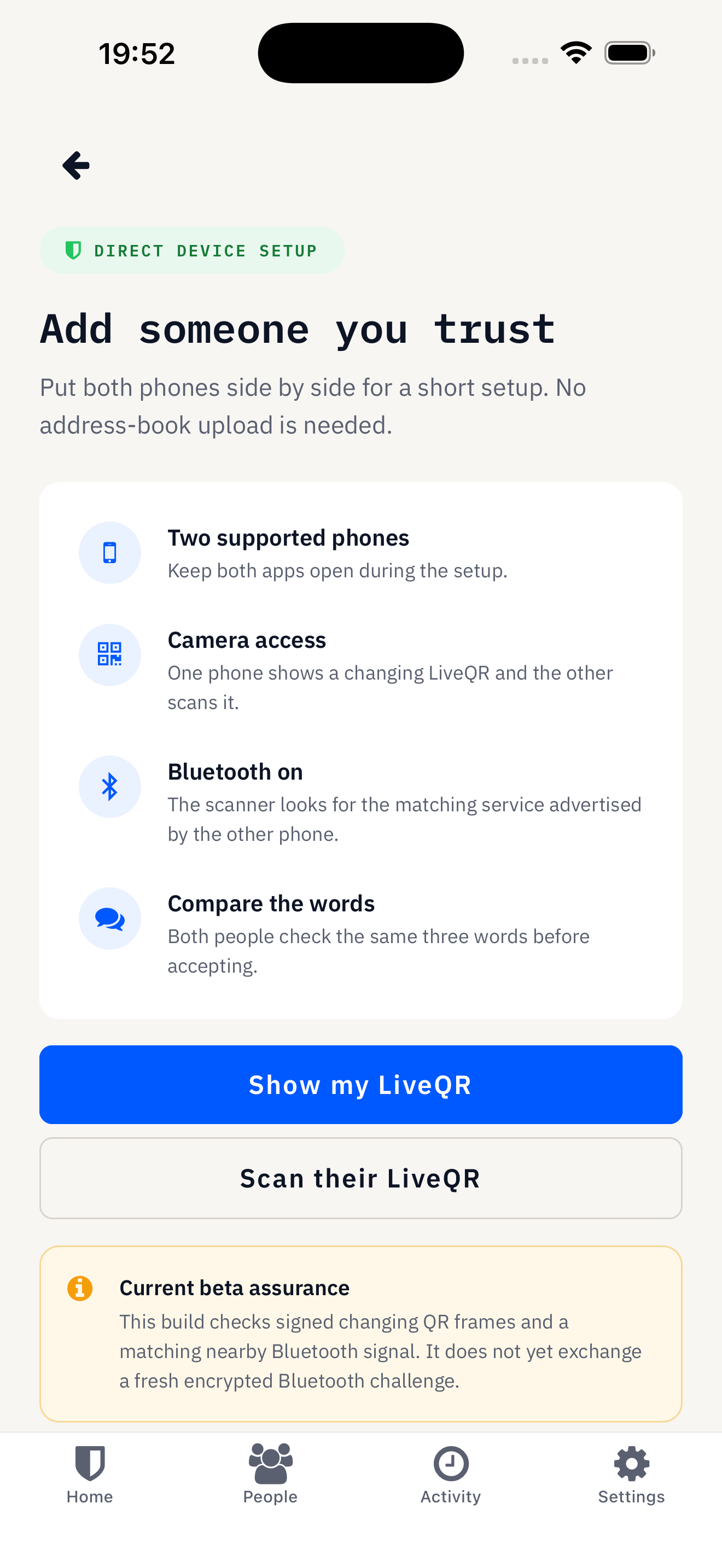
Two signals, one human check
A saved QR screenshot is not enough.
The beta scans three fresh, sequential QR frames, connects to the matching Bluetooth service, and verifies a fresh challenge signed by the presenting phone. Both people then compare the same short code before accepting.
CodeWords for Personal Use
Give family and friends a safer way to check.
Connect with a parent, partner, adult child, relative, or close friend before an emergency. If a future request feels wrong, stop the conversation and check the exact action in CodeWords.
CodeWords for Business
Make it normal to challenge unusual instructions.
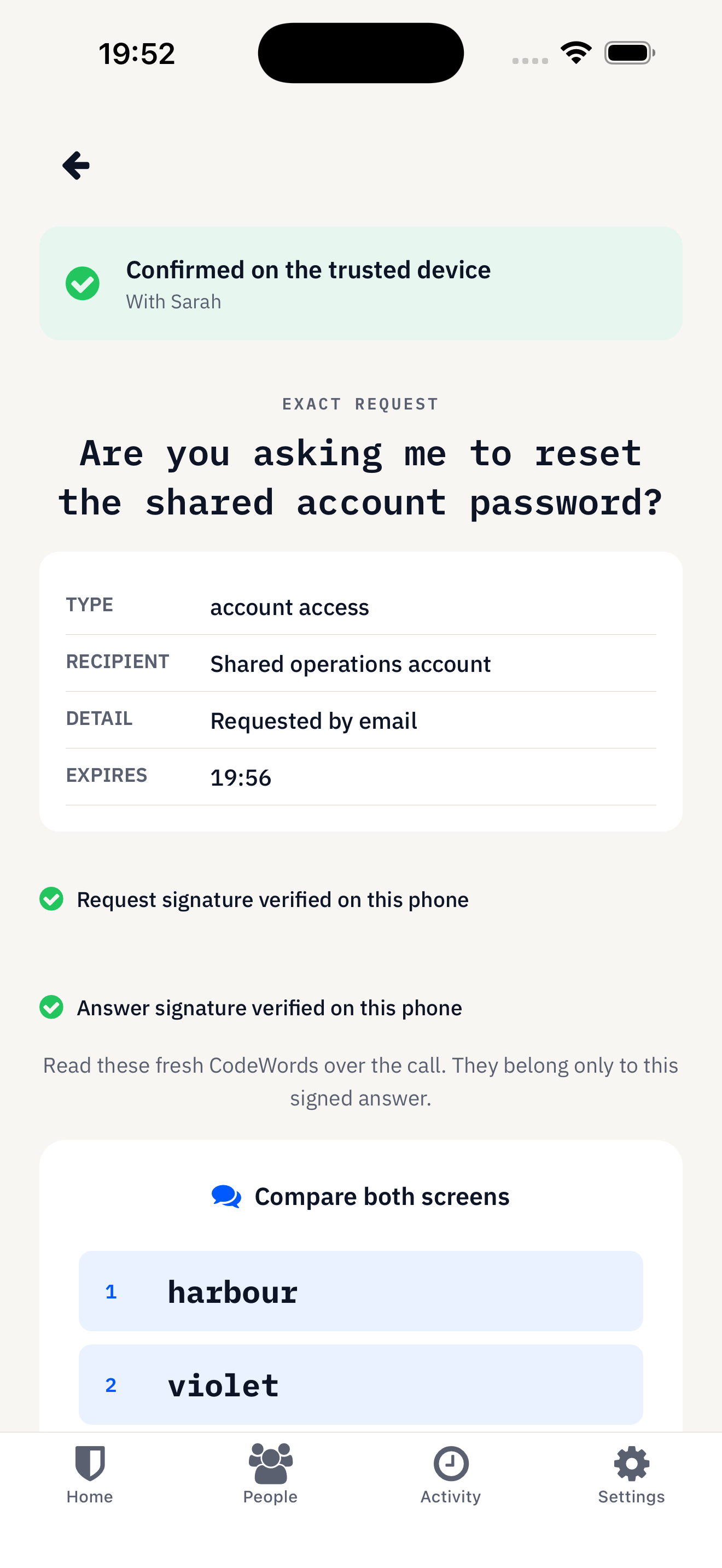
Build trusted links between colleagues first, then extend them to named suppliers and clients. CodeWords gives each relationship a separate signed path for checking the exact request before anyone acts.
CodeWords adds a layer of trust, but the team must use it. Make pausing and checking expected, even when an urgent request appears to come from a senior leader. Keep dual approval, independent call-backs, and account controls in place.
What a result means
Confirm the device and the request, not the caller’s identity.
A valid confirmation means
- The previously enrolled phone responded.
- The responder opened CodeWords and approved the displayed request.
- The signed answer is fresh, time-limited and bound to those details.
It does not prove
- That a voice, video image, email address or legal identity is genuine.
- That the phone is not stolen and already unlocked.
- That the person is free from coercion or that the requested action is safe.
Add trust before you need to question it.
Join the personal release with someone you trust, or talk to us about a controlled business pilot.