They’re Meeting a Stranger. Alone. In a Private Location.
lone workers in the UK
violent incidents against lone workers annually (HSE)
to verify with Certifyd
The reality of lone workers in the UK.
Identity verification for lone workers protects employees who meet unfamiliar people in private or isolated locations. Certifyd uses bi-directional authentication — both the lone worker and the person they’re meeting verifiably prove their identity to each other before or at the point of contact. This creates a verifiable record of who the lone worker met, when, and where — critical for both personal safety and organisational duty of care. If the other person can’t verify, the lone worker has a clear signal to disengage.
Over 6 million people in the UK work alone at some point during their working week. Estate agents show properties to strangers. Social workers visit clients in their homes. Mobile engineers attend callouts alone. Delivery drivers enter unfamiliar areas. Each of these scenarios involves a worker meeting an unknown person in a location where help may not be immediately available.
Employers have a legal duty of care under the Health and Safety at Work Act 1974 and the Management of Health and Safety at Work Regulations 1999 to assess and mitigate risks to lone workers. This includes risks from the people they interact with. Most lone worker safety systems focus on location tracking and panic buttons — reactive measures that respond after an incident. They do not address the prevention of incidents through identity verification.
Certifyd adds a preventive layer. Before a lone worker meets someone, both parties can verify through device-verified authentication. The lone worker knows who they’re meeting, and the other person knows who the worker is. A record of the verified meeting is created automatically. If someone refuses to verify, the lone worker has grounds to refuse the meeting or escalate. This shifts lone worker safety from reactive (panic button after the fact) to preventive (identity verification before the meeting).
This is broken.
Here's why.
Lone workers meet unfamiliar people in private locations with no independent identity verification.
Existing lone worker systems are reactive (panic buttons, GPS tracking) — they respond after incidents, not before.
Employers have a legal duty of care but limited tools for proactive lone worker protection.
When incidents occur, there’s often no verifiable record of who the lone worker was meeting.
Simple verification.
Every time.
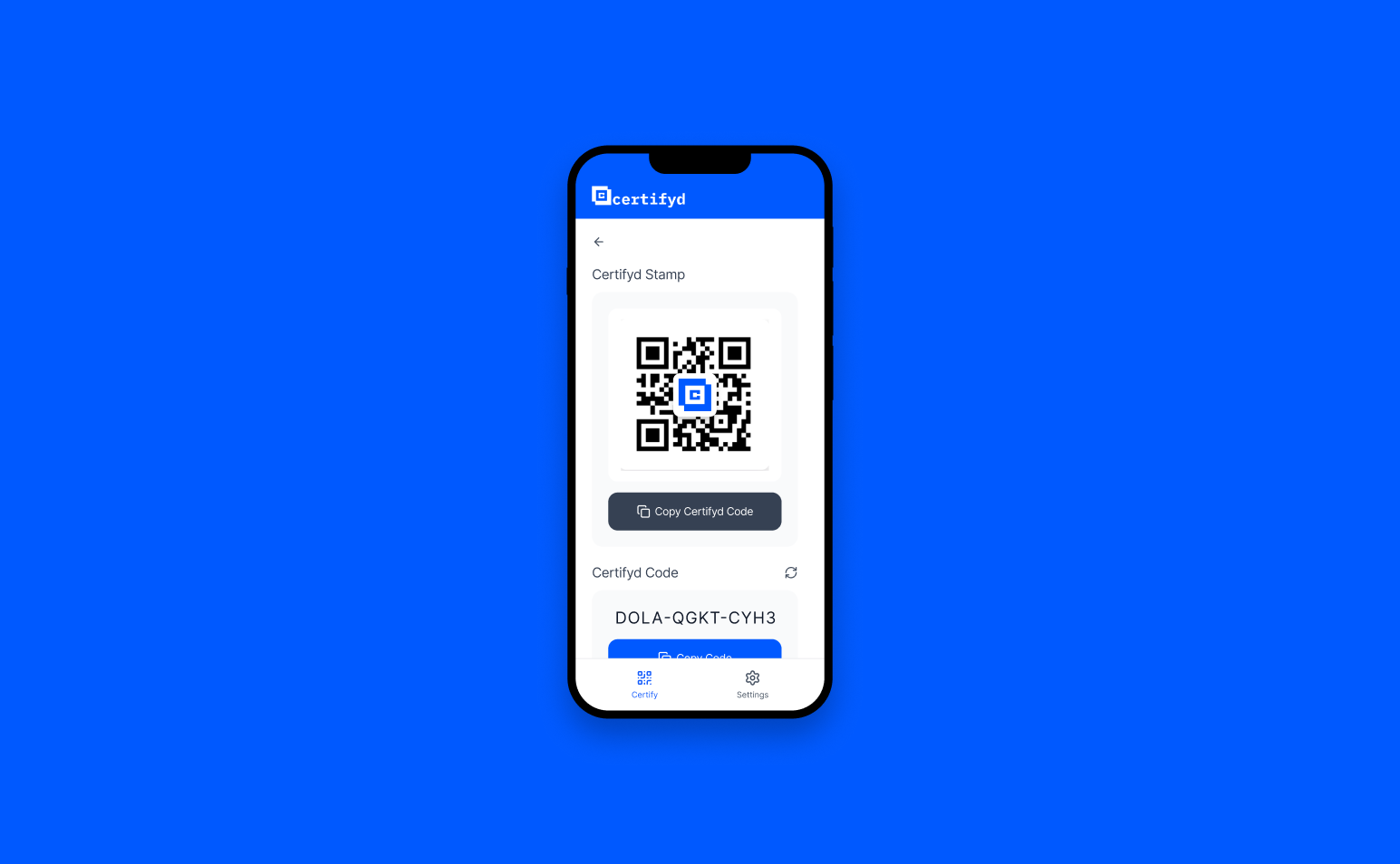
Before the meeting, both parties open Certifyd and verify through their registered devices
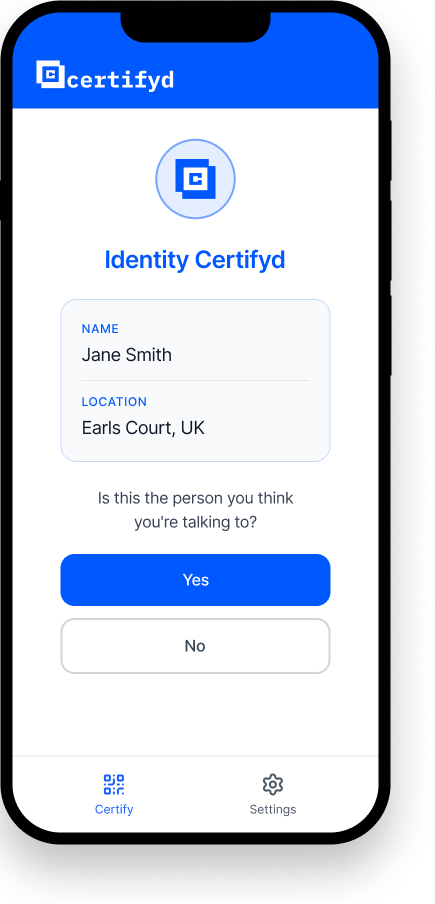
Each person’s identity is verified and confirmed — bi-directional, not one-way
A pre-meeting verification record is created: who is meeting whom, when, and where
If the other person can’t or won’t verify, the lone worker has grounds to disengage or escalate
Ready to see it in action?
Book a demo or tell us about your needs.
Common questions.
Certifyd adds identity verification to lone worker interactions. Before meeting an unfamiliar person, the lone worker can request Certifyd verification. Both parties prove their identity through their device-verified verified credentials. This creates a verified record of the meeting and gives the lone worker confidence about who they’re meeting — or a clear warning signal if the other person can’t verify.
No. Certifyd complements existing systems. GPS tracking, panic buttons, and check-in procedures remain important reactive safety measures. Certifyd adds a preventive layer: verifying the identity of the person the lone worker is meeting before the interaction begins. The combination of prevention (Certifyd) and response (existing systems) provides more comprehensive protection.
Any role that involves meeting unfamiliar people in private or isolated locations: estate agents conducting viewings, social workers visiting clients, mobile engineers attending callouts, domiciliary care workers, charity workers conducting home visits, and surveyor roles. The common factor is a worker meeting a stranger in a location where they may be alone.
Yes. Certifyd verification is bi-directional. The client verifies the lone worker (confirming they are from the company they claim to represent) and the lone worker verifies the client (confirming they are who they said they would be). This mutual verification protects both parties and creates a meeting record for both.
Explore more use cases.
Related Solutions
Related Reading
External Resources
Protect your lone workers with identity verification
Book a demo to see how Certifyd works for your team, or tell us about your verification needs and we'll get back to you within 24 hours.
Try the CodeWords demo →Read: Two-Way Verification Explained